













































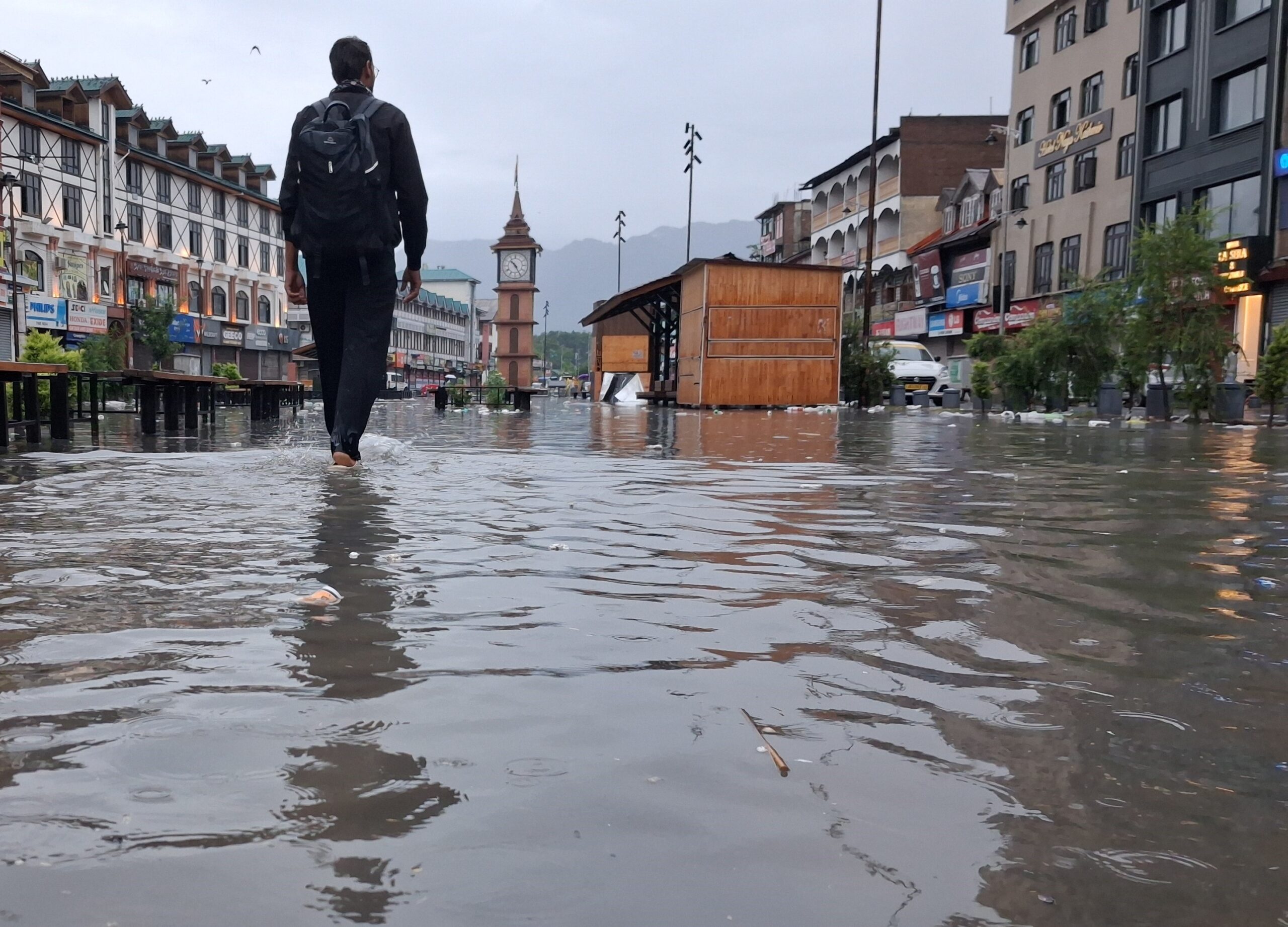
It should not take hours of rain to bring a capital city to its knees. Yet, every intense spell of precipitation in Srinagar tells the same story, submerged roads, stranded commuters, disrupted businesses and frustrated citizens asking the same question: why does the city continue to flood despite years of public investment and urban redevelopment?
The issue is no longer about an unusually heavy downpour. It is about the inability of urban infrastructure to cope with conditions that are becoming increasingly common. Climate change has made extreme weather events more frequent and intense, but that cannot become a convenient explanation for recurring civic failures. Cities are expected to anticipate changing realities, not merely react to them.
Equally troubling is the tendency to shift responsibility. Whether a particular road falls under one department, another agency or a special mission is of little consequence to the ordinary citizen. A flooded street does not distinguish between administrative jurisdictions. People expect governance to function as a coordinated whole, not as disconnected islands of responsibility where accountability disappears in a maze of institutional boundaries.
Urban planning cannot be compartmentalised. Roads, drainage, sewerage, flood channels and stormwater systems are parts of a single ecosystem. Strengthening one while neglecting the other creates an illusion of development rather than real resilience. Beautiful streets, redesigned public spaces and modern infrastructure lose much of their value if they fail the first serious test of nature.
The recent waterlogging should serve as a wake-up call, not merely another seasonal headline. It calls for a comprehensive review of Srinagar’s drainage capacity, better coordination among civic agencies, scientific mapping of vulnerable zones and time-bound implementation of long-term solutions rather than temporary dewatering exercises after every heavy shower. Infrastructure planning must also account for future climate scenarios instead of relying on outdated rainfall assumptions.
Transparency is equally important. Public money has been invested over several years in improving urban infrastructure. Citizens deserve to know whether projects have achieved their intended objectives, where the gaps remain and how those gaps will be addressed. Accountability is not about assigning blame after every crisis; it is about ensuring that mistakes are identified and corrected before they become recurring disasters.
Srinagar is more than a tourist destination; it is home to lakhs of people whose daily lives depend on efficient civic services. The city deserves infrastructure that is as functional as it is aesthetically pleasing. A truly modern city is not judged by its illuminated boulevards or redesigned streetscapes alone, but by its ability to remain safe, accessible and resilient when faced with the challenges of an unpredictable climate.
The rain has exposed more than flooded roads. It has exposed the urgent need for integrated planning, institutional accountability and infrastructure that works when citizens need it most.