













































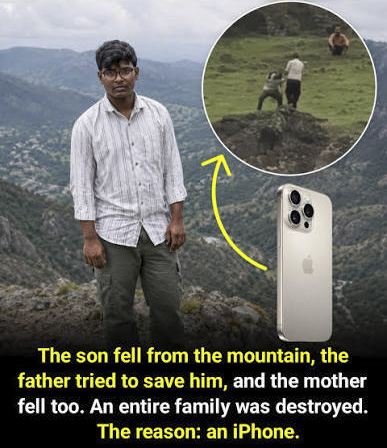
The death of a young man and his parents in Maharashtra, reportedly following a dispute over an expensive smartphone and its instalments, is a tragedy that should leave society deeply unsettled. Three lives were lost in circumstances that began, according to police accounts cited in reports, with a family disagreement over money. It would be simplistic, however, to reduce the incident to an “iPhone tragedy”. The phone may have been at the centre of the immediate dispute, but the larger questions concern consumer pressure, family relationships, emotional distress, financial expectations and our increasingly complicated relationship with material possessions.
An expensive device can be replaced. A family cannot.
What makes the incident particularly painful is the prolonged effort to prevent the young man from taking the fatal step. For hours, family members, villagers, the village representative, police and rescue personnel reportedly tried to persuade him. Appeals were made, promises were offered and people attempted to reason with him. Yet the young man remained in a state where, according to reports, he repeatedly insisted that death was the only way out. The tragedy that followed demonstrates how quickly an intense emotional crisis can overwhelm reason and how difficult it can be for ordinary people, even with the best intentions, to respond effectively to such moments.
There is also a lesson here for families. Adolescence and early adulthood are periods of intense emotional change, when disappointment can sometimes feel disproportionately overwhelming. A disagreement about money, a failed expectation, a relationship, an examination or a material possession may appear temporary to an adult but can feel unbearable to a young person in distress. This does not mean that every demand should be accepted. Nor does it mean parents should surrender boundaries out of fear. It means that disagreement must remain a conversation, not become a contest of pride, authority or emotional punishment.
The culture of consumption deserves scrutiny too. Smartphones have become indispensable tools for communication, education and work, but they have also become powerful symbols of status. Advertising, social media and peer comparison can create an environment in which owning the latest device appears to signify success or belonging. When affordability collides with such expectations, families can find themselves under pressure to provide things they simply cannot comfortably afford.
But perhaps the most important lesson lies elsewhere: we must learn to recognise emotional crises before they become irreversible.
When someone says that they cannot go on, that there is no alternative, or that death is the only solution, such statements must never be dismissed as anger, manipulation or attention-seeking. They demand immediate attention and professional help. Families, schools, colleges and communities need greater awareness of how to respond when a young person enters a state of acute distress. In a crisis, winning an argument matters far less than keeping a person safe.
The incident also raises questions about how society responds at the scene of a potential suicide. Crowds, cameras and public spectacle can complicate an already volatile situation. Such circumstances require trained crisis negotiators, coordinated rescue planning and careful control of the environment rather than a growing audience.
There will inevitably be attempts to assign a single cause to this tragedy. But grief deserves something more thoughtful than easy explanations. The available reports themselves indicate that the precise circumstances and mental state of the young man were still being examined. What we do know is that a family disagreement ended in an irreversible loss of three lives.
That should be enough to make us pause.
No possession is worth a life. No financial disagreement is worth a family. And no moment of despair should be allowed to convince a young person that an ending is the only answer.
Our responsibility is not merely to mourn such tragedies after they occur. It is to build families and communities where distress can be spoken about without shame, where help is sought without hesitation, and where a young person in crisis is met first with patience, protection and professional support.
Sometimes the most important thing we can give someone is not what they are asking for, but the time, attention and care needed to help them see that the crisis will pass.