


















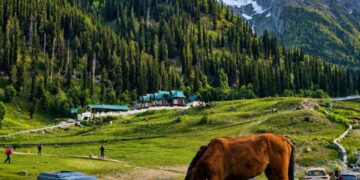










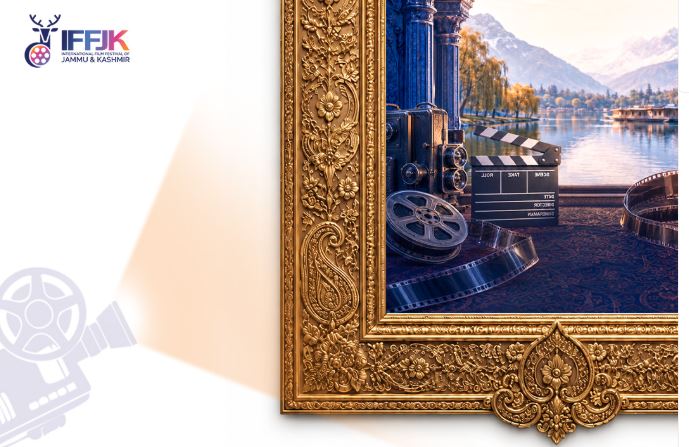
There are places that lend themselves to cinema, and then there are places that seem to compose their own frames. Kashmir has long belonged to the latter. Its mountains rising behind mist, rivers threading through settlements, saffron fields opening like carpets in autumn, wooden homes standing against winter skies, and the changing light over the Valley have, for generations, offered filmmakers a natural canvas of extraordinary character.
But Kashmir’s relationship with cinema has never been only about scenery. It has been a relationship between a place and an industry, between landscape and imagination. Bollywood has repeatedly turned to Kashmir for its romance, drama and visual poetry. Generations of viewers have consequently encountered the Valley not merely as a geographical space, but as a cinematic emotion.
The first International Film Festival of Jammu and Kashmir-2026 (IFFJK) offers an opportunity to deepen that relationship and, more importantly, to redefine it.
The response to the festival is already encouraging, with 875 film submissions from around 50 countries reported so far. That diversity matters. Cinema is perhaps one of the few artistic forms capable of bringing distant cultures into the same room without requiring them to speak the same language. A film made in one corner of the world can make a story from another corner immediately human. In that sense, an international film festival in Kashmir is not simply an event; it is an opening of windows.
The festival, scheduled from September 7 to 10, is particularly significant because it places Jammu and Kashmir itself at the centre of this exchange. Screenings, masterclasses, interactive sessions and panel discussions can create conversations that extend beyond films, to culture, technology, storytelling, society and the craft of filmmaking itself.
And perhaps the greatest beneficiaries could be the young people who are now emerging from media, communication and film-related institutions across Jammu and Kashmir.
There is a budding creative generation in the region that does not merely consume cinema; it wants to make it. Students are learning cinematography, editing, sound design, direction, screenwriting, photography and digital storytelling. What they often need is not another lecture about possibilities, but proximity to practitioners, exposure to different schools of filmmaking and an opportunity to see their own ideas in conversation with the wider world.
A film festival can provide precisely that ecosystem.
Filmmaking is an art before it becomes an industry. It demands the eye of a photographer, the sensitivity of a writer, the discipline of an editor, the imagination of a director and the patience of an entire crew. Around every film exists an equally fascinating universe of music, costume, production design, visual effects, location management, sound, acting and storytelling. A vibrant festival culture can therefore nurture far more than filmmakers, it can stimulate an entire creative economy.
For Jammu and Kashmir, this carries particular promise. The region possesses both the landscape and the cultural texture that cinema seeks, but its greatest cinematic asset may ultimately be its people and their stories. The Valley has histories, characters, memories, traditions and contemporary realities waiting to be interpreted through fresh creative eyes.
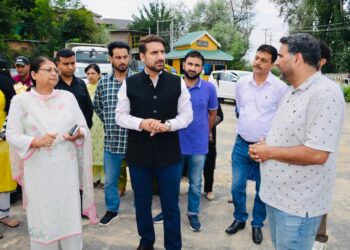
This is where the initiative of the Department of Information and Public Relations (DIPR), Government of Jammu and Kashmir, deserves appreciation. The collaboration with the National Film Development Corporation (NFDC) gives the festival an institutional framework capable of connecting local aspirations with a wider cinematic ecosystem. More importantly, the initiative signals confidence in Jammu and Kashmir not merely as a backdrop for stories created elsewhere, but as a place capable of hosting, creating and exchanging stories of its own.
There is something beautifully appropriate about bringing an international celebration of cinema to Kashmir. A place that has so often been photographed can now become a place where photographers, filmmakers, writers and artists from across the world come to look, listen, create and converse.
The Valley’s beauty has always drawn eyes towards it. The challenge now is to ensure that those eyes also discover its creative talent.
IFFJK can help make that transition.
Kashmir has been a setting in countless frames. It is time for Kashmir to become the centre of the frame.
And when the first lights come on, the screens glow and stories from around the world begin to unfold against this extraordinary landscape, the festival can offer something more enduring than four days of cinema: a new confidence that Jammu and Kashmir has a place not only in the imagination of filmmakers, but in the future of filmmaking itself.
Cinema may arrive as a festival. Its possibilities, if nurtured well, can remain long after the festival ends.