
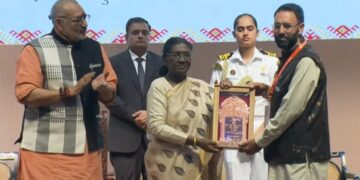




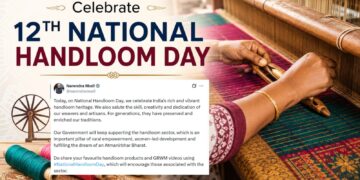



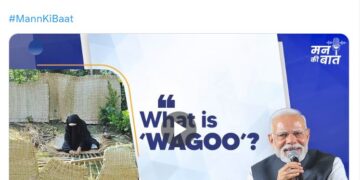





















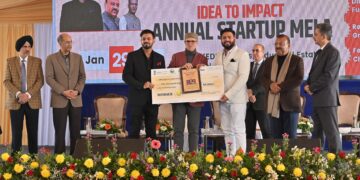







On National Handloom Day, the celebration of handloom heritage is also an occasion to look closely at the people who keep that heritage alive. Prime Minister Narendra Modi, in a post on X, paid tribute to the skill, creativity and dedication of the country’s weavers and artisans, describing handloom as an important pillar of rural empowerment, women-led development and the vision of an Atmanirbhar Bharat. Jammu and Kashmir Lieutenant Governor Manoj Sinha also extended his greetings, calling for collective efforts to preserve traditional handloom heritage and empower the artisans who continue to keep age-old crafts alive.
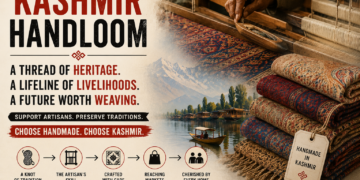
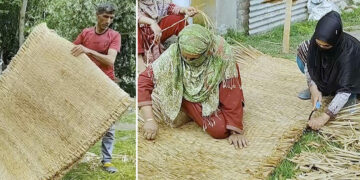
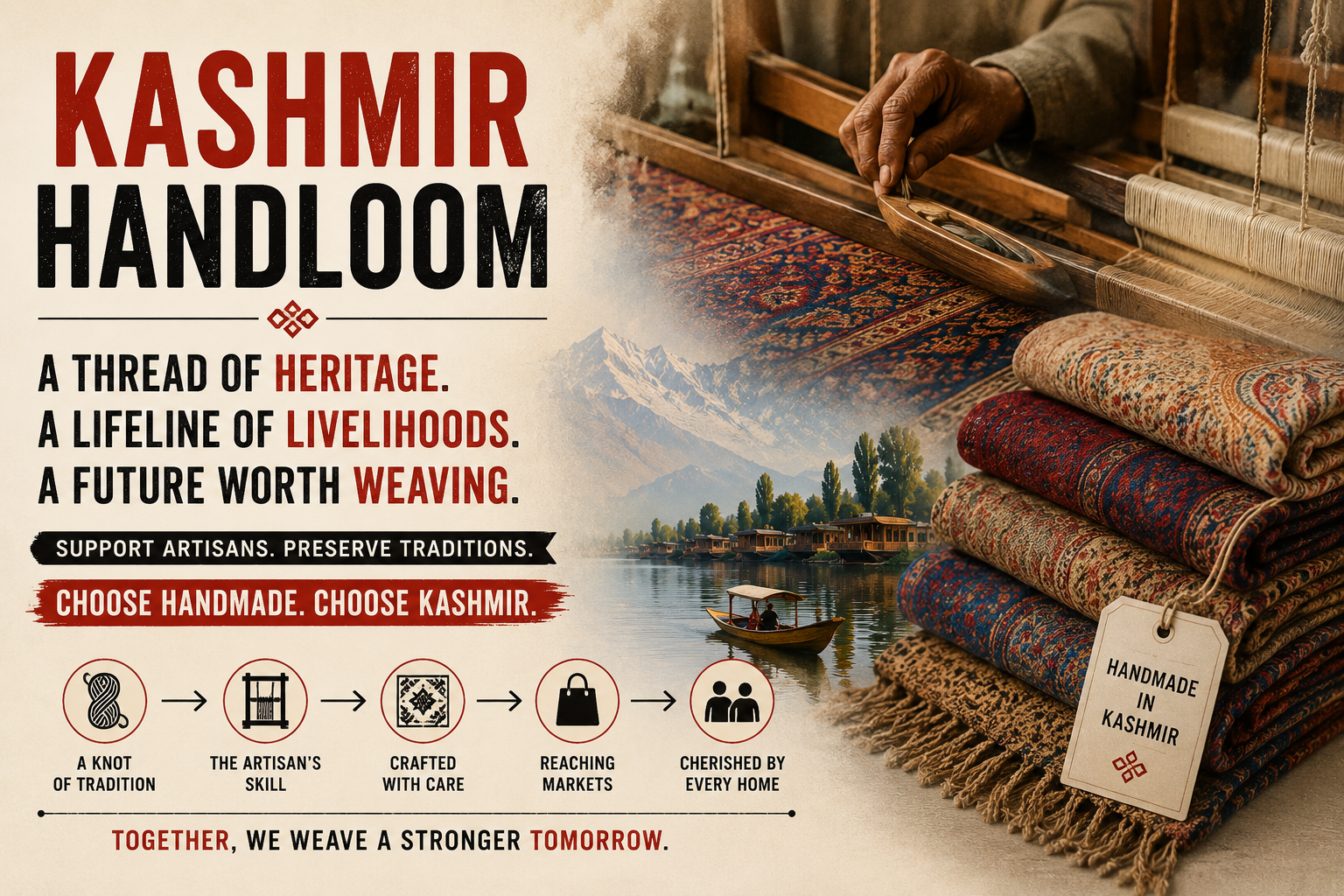
For Kashmir, this is a conversation that carries particular significance. The story of a handwoven Kashmiri product begins long before it reaches a showroom, a home or a customer. It may begin with a thread, a knot, a pattern remembered from generations, a hand preparing the material, or a weaver sitting at a loom. Between that first thread and the finished product lies an extraordinary chain of human skill and patience. Every movement of the hand adds value. Every pattern carries memory. Every completed piece represents hours of labour that cannot be replicated by a machine in quite the same way. Yet, at the beginning of that journey stands an artisan whose economic security is often far less certain than the value of the product eventually created.
Kashmir’s weavers, craftsmen and artisans are custodians of a living cultural inheritance. But cultural value alone does not guarantee economic sustainability. Rising input costs, changing consumer preferences, competition from machine-made products, limited market access and the difficulty of reaching customers directly can place enormous pressure on traditional crafts. For younger generations, the question is understandably also economic: can a traditional skill provide a stable and dignified livelihood?
This is where handholding becomes essential. Support cannot end with appreciation on a particular day. It must travel the entire journey, from the artisan to the market and ultimately to the customer. Access to raw materials, skill development, design innovation, technology, credit, branding, packaging, digital platforms, exhibitions and wider markets can help transform traditional craftsmanship into sustainable enterprise. Equally important is ensuring that the artisan receives a fair share of the value generated by the final product.
The customer, too, has a role. Choosing an authentic handmade product is not simply a purchase. It is an investment in a person’s skill, a family’s livelihood and a cultural tradition. Greater awareness about authenticity and the difference between handmade and mass-produced products can help create informed demand. Introduction of GI Tag has started to address to this concern as well.
For Kashmir, preserving handloom and handicrafts is therefore not about freezing traditions in time. It is about allowing them to survive, evolve and remain economically meaningful in the present.
A thread becomes a pattern. A pattern becomes a craft. A craft becomes a livelihood. And eventually, it becomes something cherished by a customer far beyond the place where it was created. The responsibility is to ensure that the person who begins that journey with a single thread is not left behind by the time it reaches the customer.