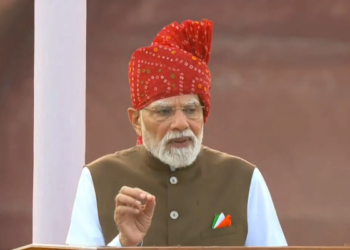












































The announcement of free online coaching for competitive examinations by Prime Minister Narendra Modi from the ramparts of the Red Fort is among the most consequential education-focused initiatives outlined in the Independence Day address. Its significance lies not merely in the availability of another learning platform, but in its potential to address one of the most persistent barriers faced by young aspirants, the cost of preparation.
For thousands of families, competitive examinations have increasingly come with a parallel financial challenge. Coaching, study material and prolonged preparation can place considerable pressure on household budgets, particularly for poor and middle-class families. The Prime Minister’s observation that the competition surrounding coaching has itself become a burden reflects a reality familiar to many households. A student’s ability to prepare for an examination should ideally be determined by aptitude, commitment and hard work, not by the family’s capacity to pay for coaching.
The proposed free online coaching initiative seeks to bring together digital public infrastructure with the country’s pool of talented teachers and educators to create a wider network of learning opportunities. This can be particularly meaningful for students who live away from established coaching centres and for families that cannot afford expensive classroom programmes. By taking quality preparation online, the initiative has the potential to make geography and financial circumstances less decisive in determining access to guidance.
The announcement assumes even greater significance when viewed alongside the Prime Minister’s target of training one crore young people in Artificial Intelligence skills over the next year. Together, these initiatives place skills, education and employability at the centre of India’s youth-focused development agenda. They recognise that India’s demographic strength can become a national asset when young people are given access to relevant knowledge and opportunities.
The emphasis on reducing the cost of preparation is particularly welcome. However, the eventual strength of the initiative will depend on the quality, accessibility and consistency of the coaching provided. Free access must be accompanied by reliable digital delivery, capable educators and learning resources that genuinely help aspirants prepare.
The announcement also carries an important message of social equity. Talent exists in every village, town and city, but opportunity has not always been distributed equally. Digital platforms can help narrow that gap by taking quality educational support to students rather than requiring every student to travel in search of it.
Education has always been one of the strongest instruments of social mobility. Making competitive-examination preparation accessible without the burden of coaching fees can give more young people a fairer opportunity to compete.
The real promise of this initiative, therefore, is simple but significant: a young person’s aspirations should not be limited by the income of the family they are born into. If implemented with quality and reach, free online coaching can become an important step towards making opportunity more accessible, merit more meaningful and India’s youth more confident in pursuing their ambitions.