






























Sonamarg, June 12: One of Kashmir’s most iconic natural landmarks, the Thajiwas Glacier in Sonamarg, is rapidly disappearing, with scientists warning that the glacier has lost nearly 95 per cent of its ice cover since the last Ice Age. The alarming findings have raised serious concerns about the future of water resources, tourism, agriculture, and the fragile Himalayan ecosystem.
The revelation comes from a recent scientific study conducted by researchers from the University of Kashmir (KU) and the Inter-University Accelerator Centre (IUAC), New Delhi. The study, titled “Paleo-glacial Reconstruction of the Thajiwas Glacier in the Kashmir Himalaya,” highlights the dramatic shrinkage of the glacier over thousands of years and warns that the pace of retreat has accelerated significantly in recent decades.
According to the study, the glacier once covered approximately 54 square kilometres during its maximum extent in the last Ice Age. Today, however, only about 2.5 square kilometres of ice remain. Researchers describe the present-day Thajiwas as a “relic glacier,” meaning it is merely a small remnant of the vast ice mass that once dominated the Sonamarg landscape.
Located in Jammu and Kashmir’s Ganderbal district, Thajiwas Glacier has long been one of the Valley’s most popular tourist attractions. For decades, visitors flocked to Sonamarg to witness snow-covered slopes and enjoy the rare experience of walking on ice even during the summer months. The glacier became synonymous with Sonamarg’s identity and played a key role in promoting tourism in the region.
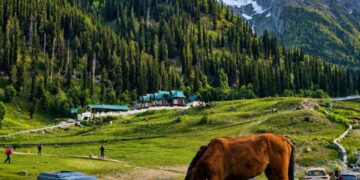
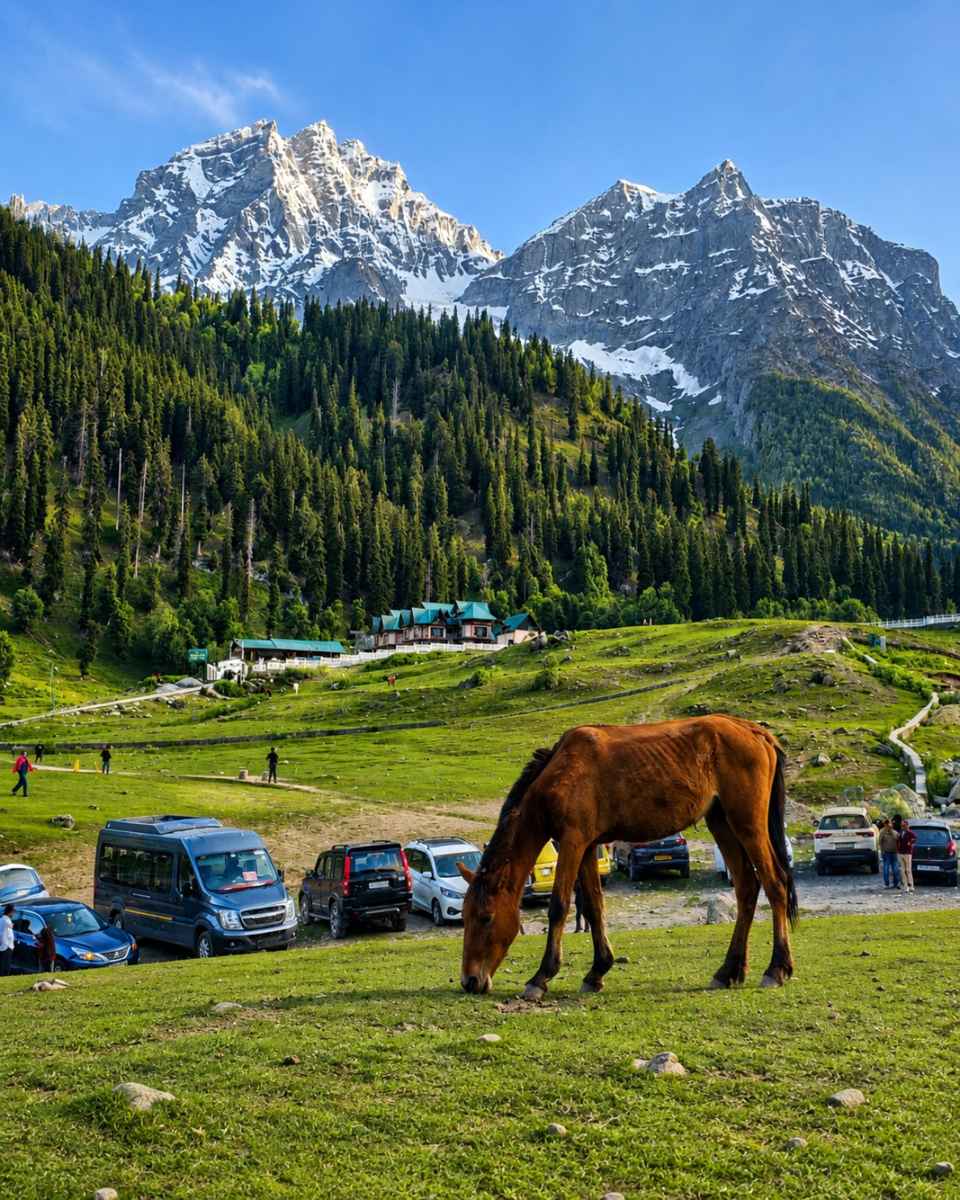
However, the landscape has changed dramatically. Tourists visiting Sonamarg today are greeted by green meadows, exposed rocks, and patches of bare earth where thick snow and ice once existed. While distant mountain peaks continue to remain snow-capped for much of the year, the glacier itself has retreated significantly, transforming the visual character of the region.
Scientists attribute the glacier’s decline to a combination of natural and human-induced factors. The primary driver is global climate change, which has led to rising temperatures across the Himalayan region. Warmer conditions have increased the rate of ice melt while simultaneously reducing the amount of snowfall received during winter months. Since glaciers depend on fresh snowfall to replenish lost ice, reduced snowfall has weakened the glacier’s ability to recover.
Researchers also point to the growing impact of black carbon pollution. Black carbon consists of tiny particles released from vehicle exhaust, industrial emissions, biomass burning, and other combustion processes. When these particles settle on glacier surfaces, they darken the ice and reduce its ability to reflect sunlight. As a result, the glacier absorbs more heat, accelerating the melting process.
Tourism-related pressures have further compounded the problem. Sonamarg experiences heavy tourist inflow during the summer season, leading to increased vehicle emissions, waste generation, and ecological disturbance. Experts warn that uncontrolled tourism in environmentally sensitive mountain regions can contribute to glacier degradation and ecosystem imbalance.
Environmental geographer Dr. Masoon A. Beig described the glacier’s condition as an environmental emergency. According to him, only around five to seven per cent of the original glacier cover remains today.
“This means there is only about 5 to 7 per cent of the glacier cover left. It is nothing short of a disaster,” he said. He warned that continued glacier retreat could have serious consequences for multiple sectors, including agriculture, horticulture, hydropower generation, and drinking water supplies.
The disappearance of Thajiwas Glacier is particularly concerning because it serves as an important source of meltwater for the Sindh River. The river supports local communities, agricultural activities, and ecosystems throughout the region. During dry periods, glacier meltwater plays a crucial role in maintaining river flow. As the glacier shrinks, experts fear that water availability could become increasingly unpredictable, potentially affecting thousands of people who depend on the river.
Scientists caution that the impacts extend beyond water shortages. Glacier retreat can increase the risk of environmental instability, alter local weather patterns, affect biodiversity, and disrupt delicate ecological systems that have evolved around glacier-fed water sources. The loss of glaciers across the Himalayas is also expected to have long-term implications for food security and economic stability in mountain communities.
To address the crisis, experts are advocating a range of conservation measures. These include stricter controls on vehicular emissions, regulation of tourist activities, restrictions on pony movement in sensitive areas, reduction of black carbon pollution, and enforcement of zero-microplastic policies. Some researchers have suggested adopting glacier-protection techniques used in Switzerland, where protective coverings are sometimes deployed to reduce ice melt in vulnerable areas.
However, scientists stress that local conservation efforts alone cannot save the glacier. They argue that meaningful action to reduce greenhouse gas emissions at national and global levels is essential to slow climate change and preserve Himalayan glaciers for future generations.
For many people, the glacier’s disappearance is not merely an environmental issue but also an emotional one. Visitors who remember the glacier from previous decades often express shock at the scale of change. Twenty-one-year-old Baidurjyo Kundu from Delhi recalled visiting Thajiwas as a child in 2012 and experiencing snow for the first time.
“I always wanted to return with friends and make new memories there. The sad part is that I may never get to see the glacier the way it once was,” he said.
The story of Thajiwas Glacier reflects a broader trend unfolding across the Himalayas, often referred to as the “Third Pole” due to its vast reserves of ice and snow. Scientists warn that glaciers throughout the region are retreating at unprecedented rates, threatening water security for millions of people across South Asia.
As Thajiwas Glacier continues to shrink, it stands as one of the clearest symbols of the accelerating impact of climate change on the Himalayan environment. Researchers say the glacier’s decline should serve as a wake-up call for policymakers, environmental agencies, and the global community to take urgent action before more of the region’s irreplaceable natural heritage is lost forever.