








































A society is ultimately judged not by the height of its skylines or the size of its economy, but by the dignity with which it treats its most vulnerable. Among all public services, healthcare remains the truest measure of that commitment. The right to timely, affordable and quality healthcare should never be determined by one’s income, social standing or place of residence. Whether a person walks into an elite super-speciality hospital or a modest primary health centre in a remote village, the expectation remains the same, to receive competent treatment with compassion, accountability and respect.
In Jammu and Kashmir, where geography itself often presents formidable challenges, healthcare carries even greater significance. Mountainous terrain, harsh winters and scattered habitations make access to medical services more than a matter of convenience, it is often a matter of survival. Every improvement in the healthcare ecosystem, therefore, has a direct bearing on the quality of life of millions.
Over the past few years, Jammu and Kashmir has witnessed significant investments in health infrastructure. New medical colleges, AIIMS campuses, upgraded district hospitals, strengthened diagnostic facilities and expanded telemedicine services have improved the region’s healthcare landscape. These developments have helped reduce dependence on referrals outside the Union Territory for several specialised treatments.
Yet infrastructure alone does not define healthcare. The true strength of any health system lies in its people and processes. A modern hospital building means little if patients encounter long waiting times, inadequate staffing, indifferent behaviour or delays in emergency care. Equally, even a small rural health centre can inspire confidence if it functions efficiently, remains adequately staffed and places patient welfare above all else.
This is where accountability becomes indispensable. Every stakeholder, doctors, nurses, technicians, administrators and policymakers, shares responsibility for ensuring that healthcare is delivered ethically, professionally and without discrimination. Medical excellence must always be accompanied by empathy. Patients seek not only treatment but reassurance during moments of vulnerability.
Private hospitals, too, play a vital role in complementing public healthcare. Many have introduced cutting-edge technologies, specialised departments and advanced surgical capabilities. Their contribution to improving medical outcomes is undeniable. However, high-quality healthcare should not become synonymous with prohibitively high costs. Transparent pricing, ethical practices and patient-centric care must remain central to private healthcare institutions.
On the other hand, government hospitals continue to serve as the backbone of healthcare delivery, particularly for economically weaker sections and rural communities. Strengthening these institutions through better infrastructure, continuous training, adequate staffing and efficient management remains essential. Public confidence grows when government hospitals consistently deliver timely and quality care.
One of the most transformative interventions in recent years has been the Ayushman Bharat Pradhan Mantri Jan Arogya Yojana (PM-JAY) SEHAT Scheme, widely known in Jammu and Kashmir through the Golden Card. By extending health insurance coverage to eligible families and enabling cashless treatment at empanelled hospitals, the scheme has significantly reduced the financial burden associated with major illnesses. For countless households, it has meant that the choice between saving a life and exhausting lifelong savings is no longer inevitable.
The Golden Card represents more than financial assistance; it reflects a larger philosophy that quality healthcare should not remain the privilege of a few. When implemented efficiently and supported by a robust network of hospitals, it has the potential to bridge longstanding inequalities in healthcare access.
Similarly, other flagship Central Government initiatives have strengthened the healthcare ecosystem in meaningful ways. Programmes under Ayushman Bharat, the establishment of Health and Wellness Centres, expansion of digital health services, improved immunisation coverage through Mission Indradhanush, enhanced maternal and child healthcare programmes, and investments in critical care infrastructure collectively demonstrate a sustained effort to improve healthcare delivery across the country, including Jammu and Kashmir.
However, every scheme ultimately succeeds only when implementation matches intent. Insurance coverage is meaningful only if beneficiaries receive hassle-free treatment. Infrastructure becomes effective only when supported by skilled professionals. Policies translate into public trust only when services are delivered consistently and transparently.
Healthcare must also remain free from social divisions. The quality of treatment should never depend upon whether a patient is wealthy or poor, influential or ordinary, urban or rural. Every individual entering a healthcare facility deserves equal dignity, equal attention and equal commitment.
The road ahead lies not merely in constructing more hospitals but in building a culture of excellence where accountability, responsibility and compassion define every interaction. Continuous quality audits, patient feedback mechanisms, transparent grievance redressal and investment in medical education will be as important as new infrastructure.
For Jammu and Kashmir, healthcare is not simply another developmental sector; it is a foundation for social stability, human development and public confidence. A resilient healthcare system empowers families, strengthens communities and enables economic progress.
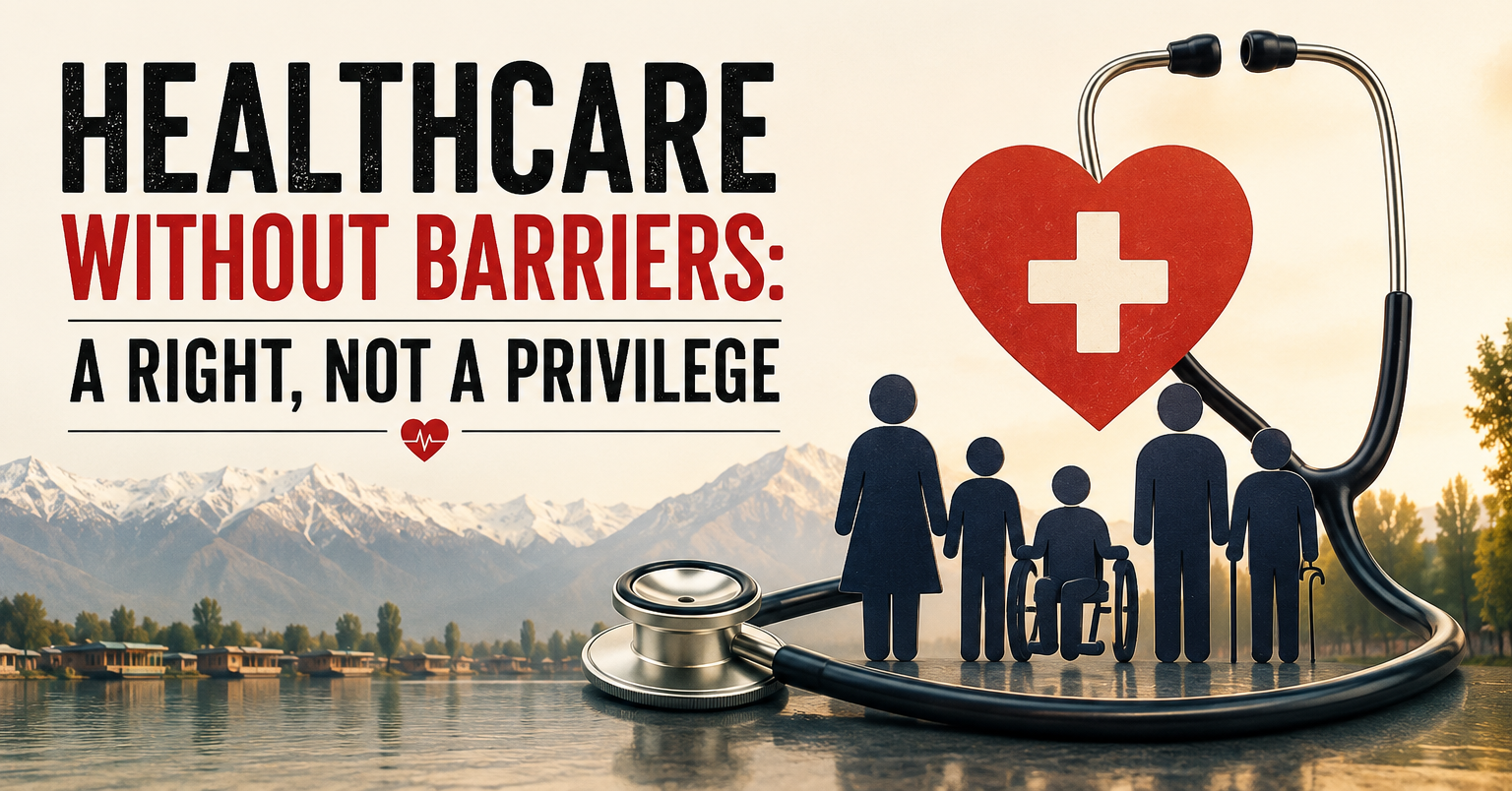
Ultimately, access to quality healthcare is neither charity nor privilege, it is a fundamental public responsibility. The measure of success will not be how many hospitals are built, but how many lives are healed with dignity, efficiency and compassion. A healthcare system that serves every citizen equally, regardless of circumstance, is not merely good governance; it is the hallmark of a just and humane society.