










































Dec 17 (KNT): The prolonged dry spell across Kashmir is likely to end in the coming days, with weather officials predicting a fresh wet spell coinciding with the onset of Chillai-Kalan, the coldest 40-day period of winter in the Valley.
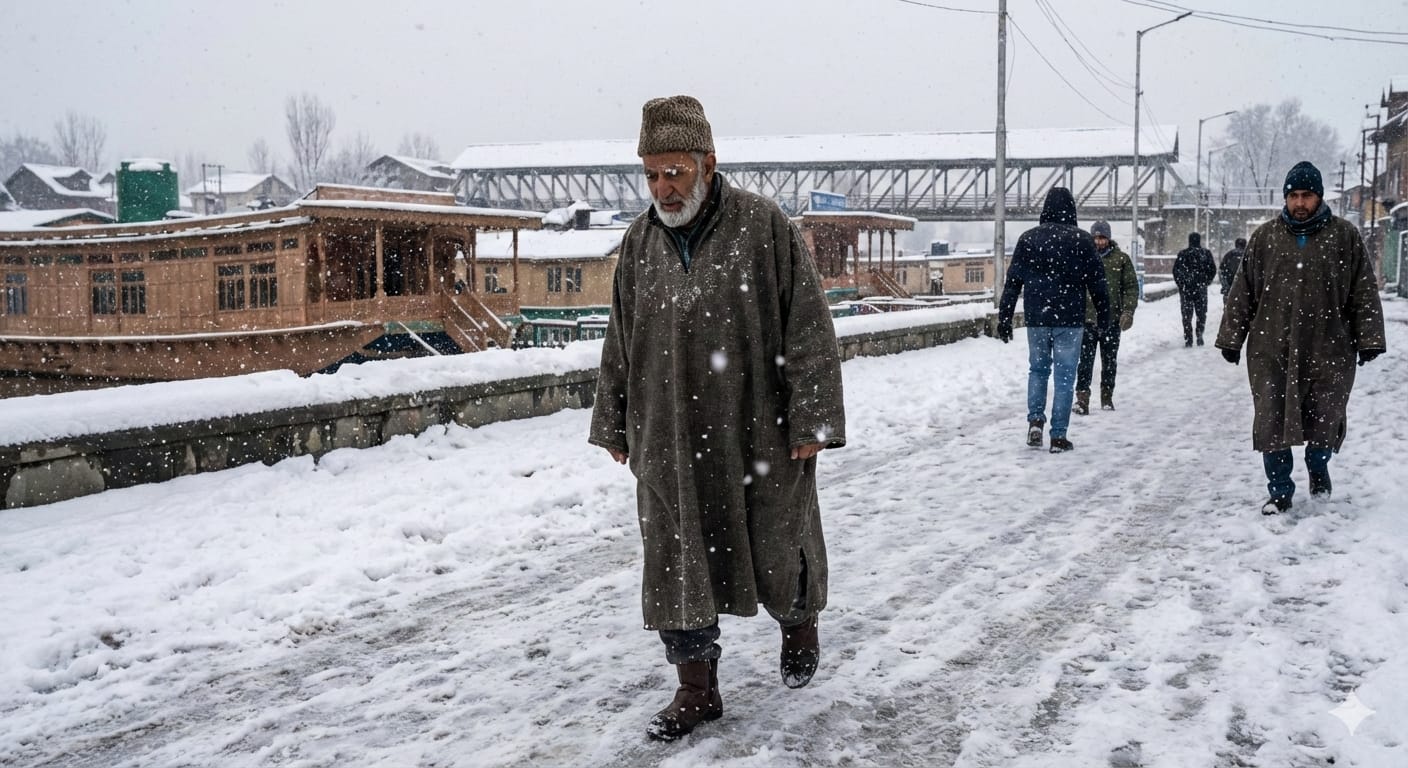
According to the local Meteorological Department, a western disturbance is expected to affect Jammu and Kashmir around December 21 and 22, which also marks the beginning of Chillai-Kalan. The system is likely to bring moderate to heavy snowfall to higher reaches of Kashmir, while the plains may experience light to moderate rain or snowfall.
Chillai-Kalan, starting from December 21 and lasting till January 30, is traditionally the harshest phase of winter in Kashmir. The period is usually characterised by freezing temperatures and frequent snowfall, significantly impacting daily life across the Valley.
So far, Kashmir has witnessed a largely dry winter, with no major wet spell recorded. Officials said the prolonged dry conditions have contributed to an increase in seasonal ailments, including cough, cold and other respiratory issues among residents.
Meanwhile, sub-zero night temperatures continued to prevail across most parts of the Valley. Srinagar recorded a minimum temperature of minus 1.6 degrees Celsius on Tuesday night, slightly higher than Monday’s minus 1.8 degrees Celsius. Dense fog engulfed Srinagar and several other areas, particularly those near water bodies, during the early morning hours.In south Kashmir, Qazigund recorded a low of minus 3 degrees Celsius, while Kokernag registered a minimum of minus 0.1 degrees Celsius. Kupwara in north Kashmir settled at minus 2.2 degrees Celsius.
Gulmarg, the famed ski resort, recorded a minimum temperature of 1.6 degrees Celsius, remaining above the freezing point. Pahalgam, a key base camp for the annual Amarnath Yatra, logged a low of minus 2.8 degrees Celsius.Shopian and Pulwama towns in south Kashmir emerged as the coldest places in Jammu and Kashmir, with both recording a minimum temperature of minus 4.4 degrees Celsius, officials added.