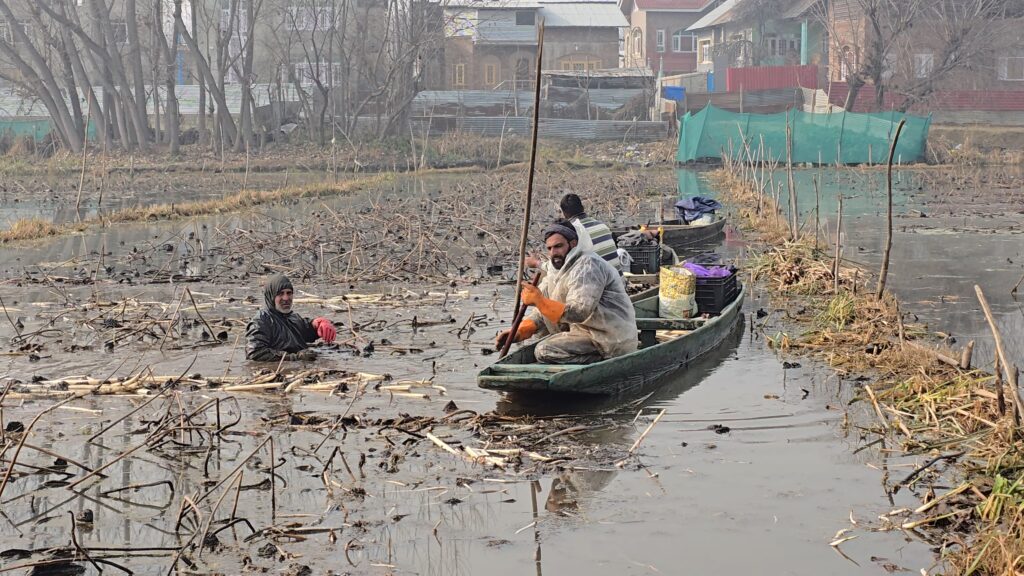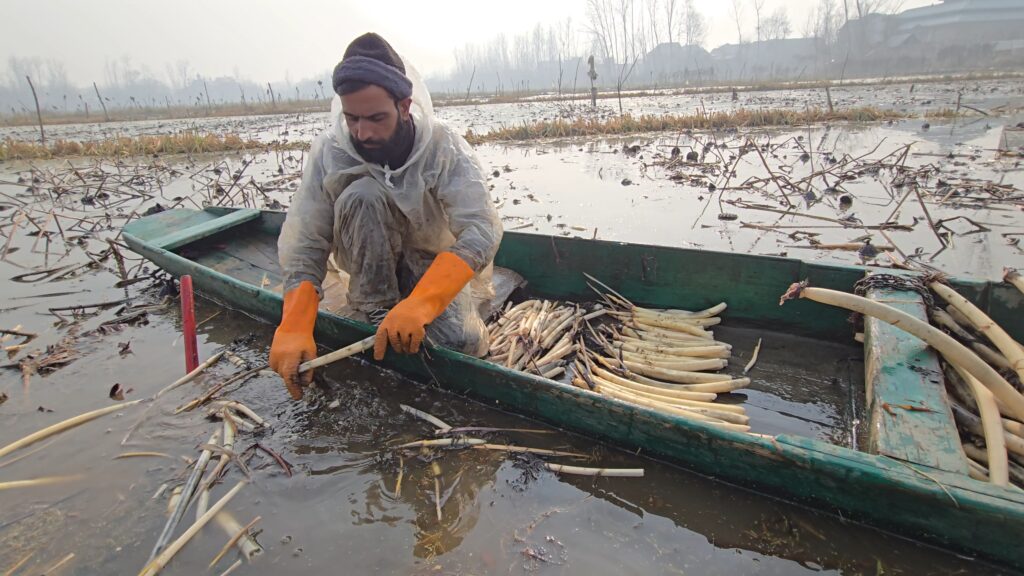








































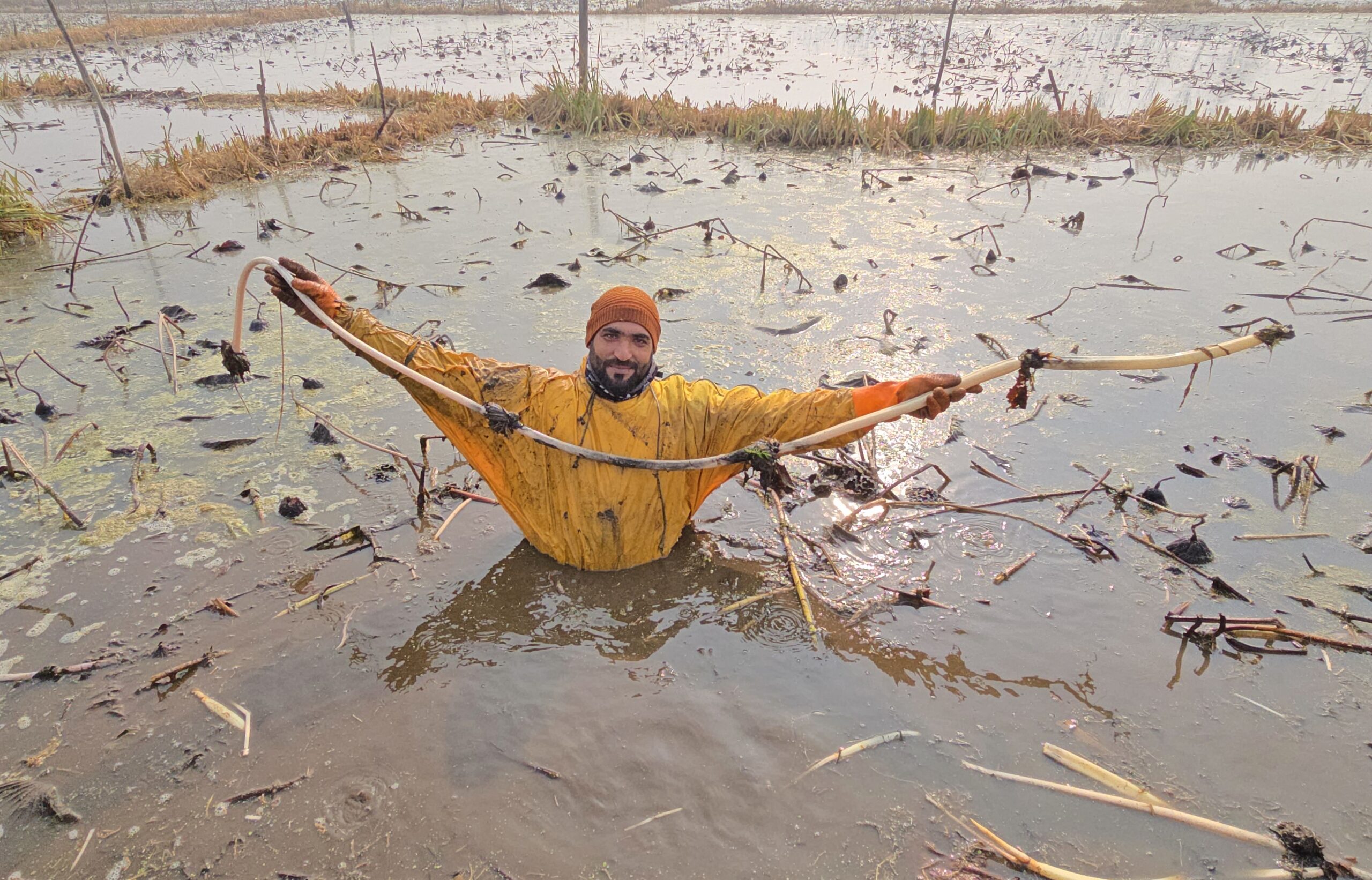
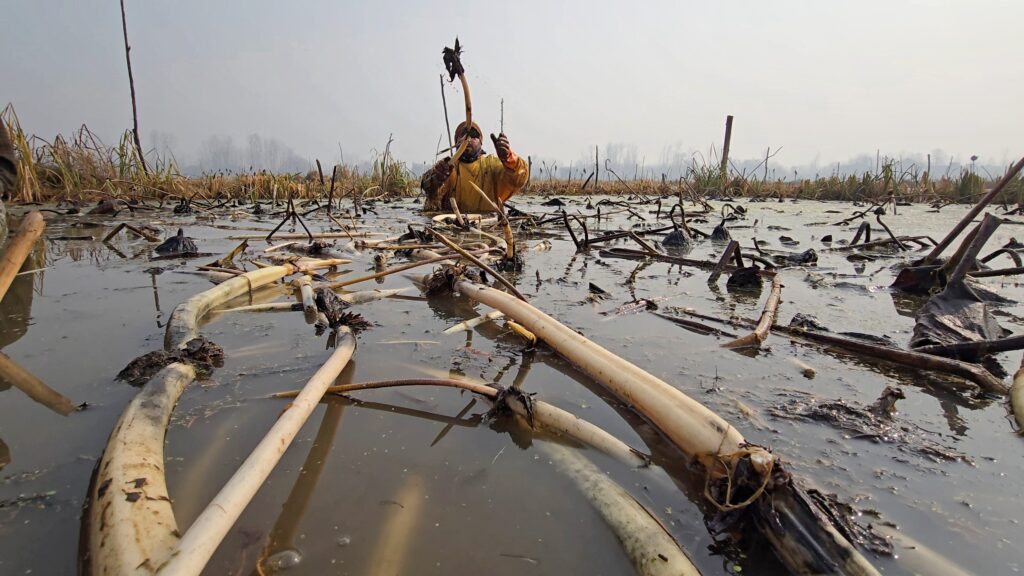
In the depths of a Kashmiri winter, lotus stem farmers step into freezing waters to protect a livelihood passed down for generations. Temperatures drop below zero. Thin ice breaks under their feet. Still, they search for nadru, the lotus stem that anchors winter cuisine and household income across the valley.
This season, the struggle is harder.
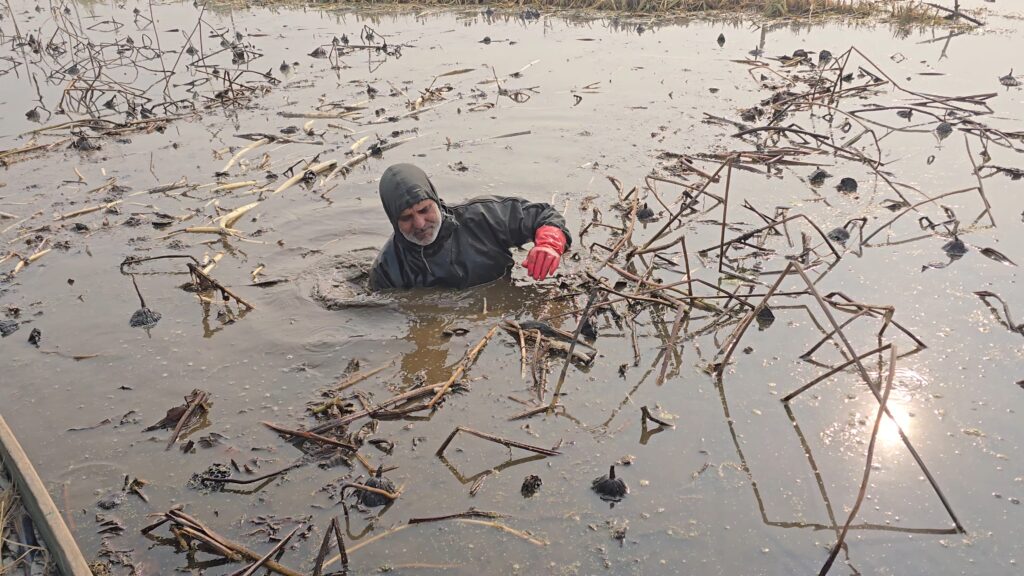
Farmers in the Sangam water bodies, long known for rich lotus cultivation, report sharp declines in yield. Water levels fed by the Sindh from Ganderbal have dropped. Local streams have receded. Large patches of once submerged land now lie exposed. Lotus plants grow weaker under stress.
“The water is too shallow now,” says Muhammad Ramzan, a farmer with over 30 years of experience. “We walk farther and dig deeper, but we find much less nadru. Cold is normal for us. This shortage is not.”
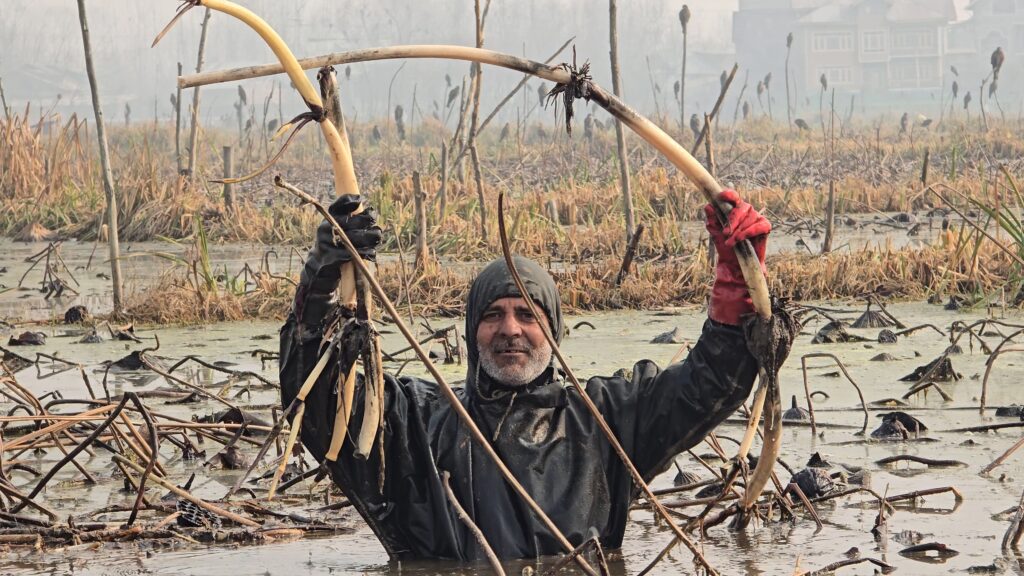
Winter lotus harvesting is among the region’s most punishing farm work. Farmers wade waist deep for hours in icy water. They bend repeatedly to pull stems from thick mud. Frostbite is common. Breathing problems follow long exposure. Muscle injuries persist. Yet work continues because there is no alternative.
Demand for nadru is rising in local and national markets. Supply is shrinking. The pressure on farmers keeps growing.
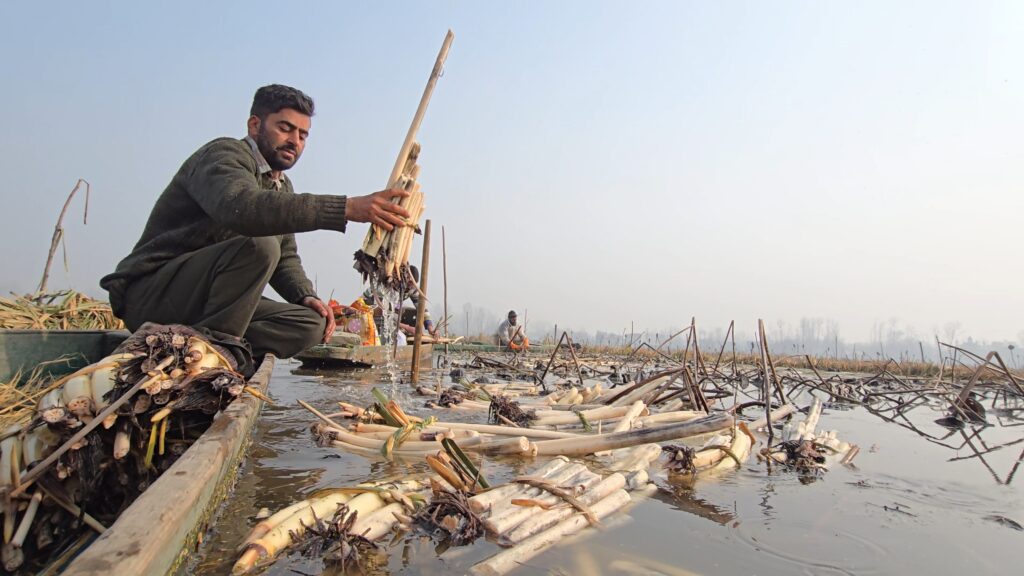
“The decline in Ganderbal’s water channels signals a serious environmental shift,” says a local environmental researcher. “If this continues, lotus cultivation could collapse. It is both an economic and cultural lifeline.”
Lower yields have pushed market prices up. Farmers say the gains do not offset their losses.
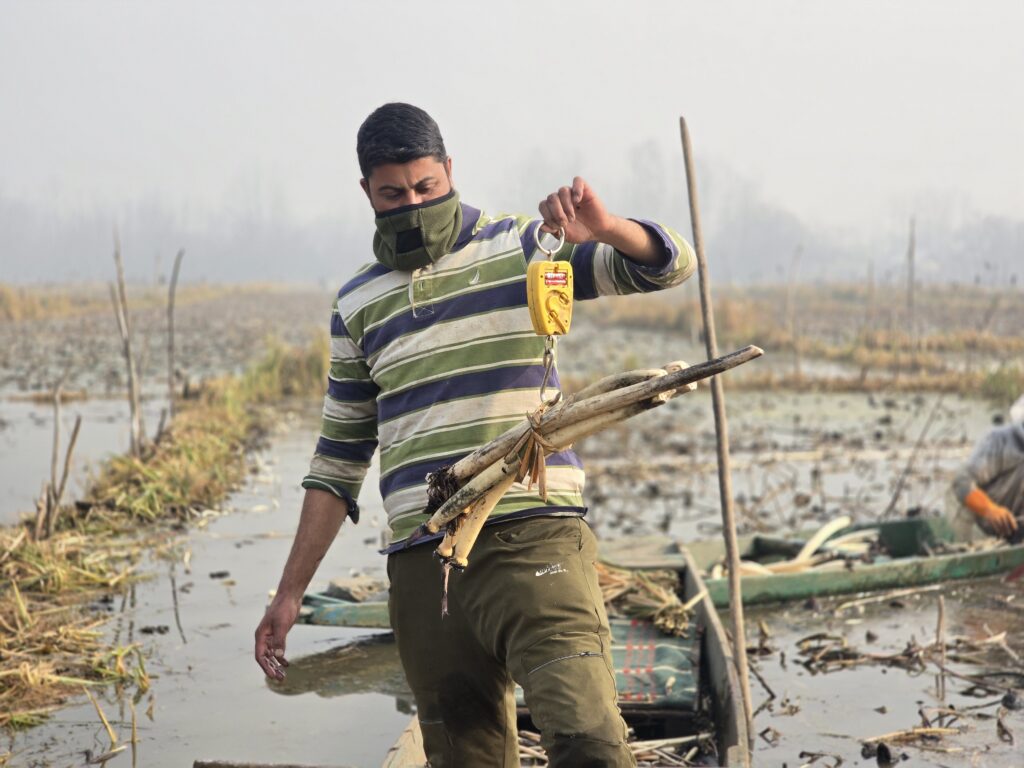
“We earn less even though we work more,” says Ishtiyaq Ahmad Khanday, another farmer from the area. “The effort has doubled. The produce has not.”
Despite these hardships, farmers return to the water each day. Their resilience reflects the deep roots of Kashmir’s agrarian traditions.
But with water sources shrinking and winters growing harsher, many now fear that this iconic harvest may not survive unchanged. The frozen fields of Kashmir are sending a warning.