












































The Central Consumer Protection Authority (CCPA), headed by Chief Commissioner Smt. Nidhi Khare and Commissioner Shri Anupam Mishra, has imposed a penalty of ₹1 lakh on SpiceJet Limited for adopting deceptive design practices, commonly known as dark patterns, on its flight booking platform.
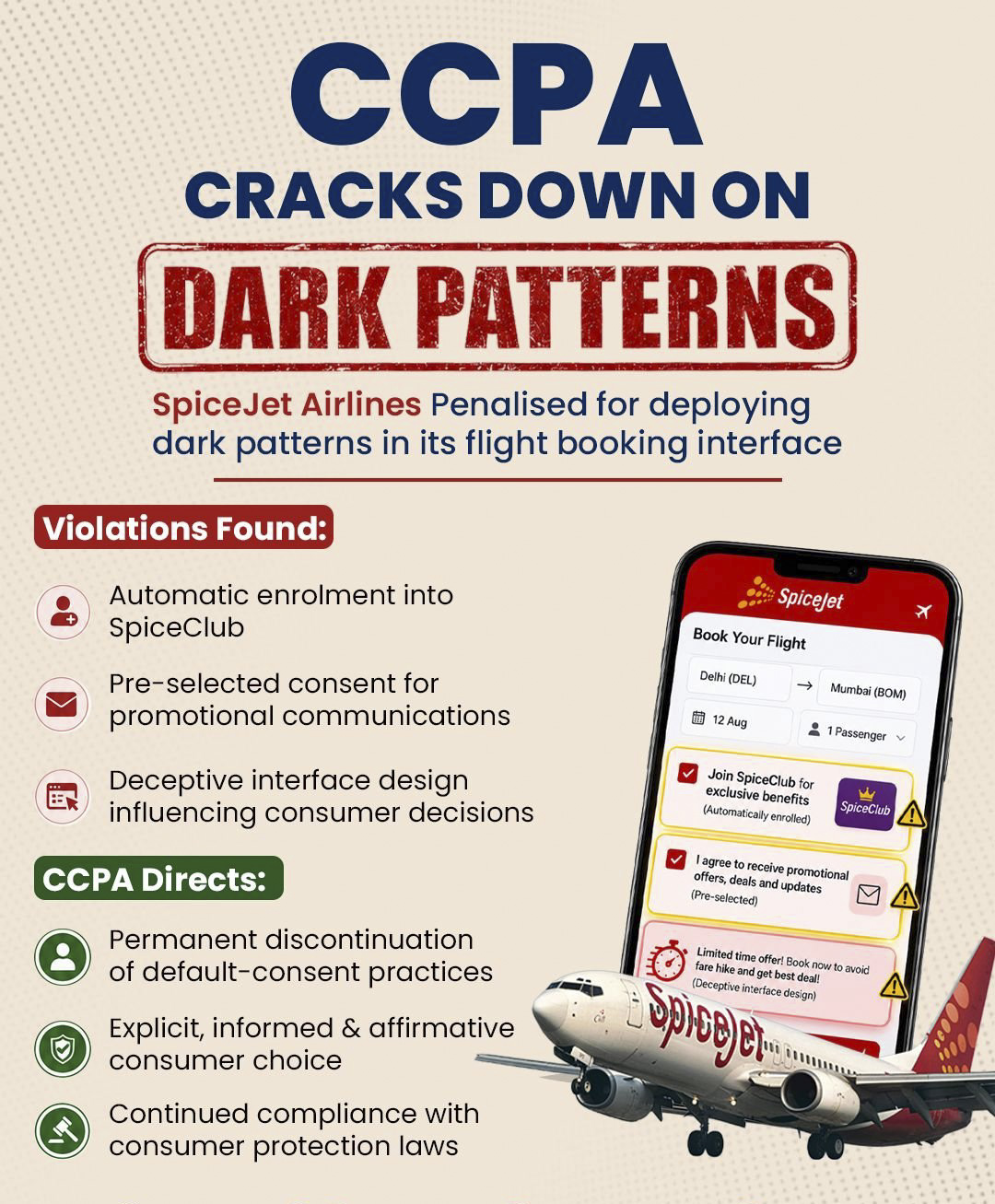
The Authority observed that consumers were automatically enrolled in the SpiceClub Loyalty Programme through a pre-ticked checkbox and were also deemed to have consented to receive promotional communications as the default option was pre-selected without any affirmative action on their part.
Even after the CCPA issued a notice, the airline replaced the earlier mechanism with another pre-ticked checkbox for obtaining consent to receive promotional messages through text messages, WhatsApp and email, thereby continuing the same practice in a different form.
During the proceedings, SpiceJet submitted that the issue had occurred due to a technical error. The Authority directed the company to furnish an undertaking confirming that the necessary corrective measures had been implemented and would continue permanently.
The CCPA identified the practices as instances of Forced Action, Interface Interference and Trick Question, observing that they impaired consumer autonomy, undermined informed decision-making and were inconsistent with the principles of fair and transparent consumer engagement.
The Authority held that the company’s conduct violated provisions of the Consumer Protection Act, 2019 relating to unfair trade practices, unfair contracts and misleading representations. It also found the company to be in contravention of Rule 4(9) of the Consumer Protection (E-Commerce) Rules, 2020, which mandates explicit and affirmative consumer consent, as well as the Guidelines for Prevention and Regulation of Dark Patterns, 2023.
The order reiterates that consumer consent must always be explicit, informed and freely given. It states that consent obtained through pre-ticked checkboxes, default settings or deceptive interface designs is invalid and contrary to consumer welfare and the provisions of law.